5 Ways to Reduce Your Inventory Costs
October 2, 2026

October 2, 2026

Inventory costs much more than its purchase price alone. While a product sits on a shelf, it ties up cash, takes up space, and requires time to receive, put away, move, and count. Insurance, handling, and the risk of depreciation add to these expenses.
Too much inventory weighs on profitability. On the other hand, too little inventory exposes a business to stockouts and urgent replenishment orders. Several steps can help maintain the right inventory levels without stockpiling products, from improving forecasts and purchasing decisions to reorganizing storage space.
Supplier orders are sometimes based on habit. A SKU sold well the previous year, so the same quantity is ordered again. If demand slows, those products remain in inventory longer than expected.
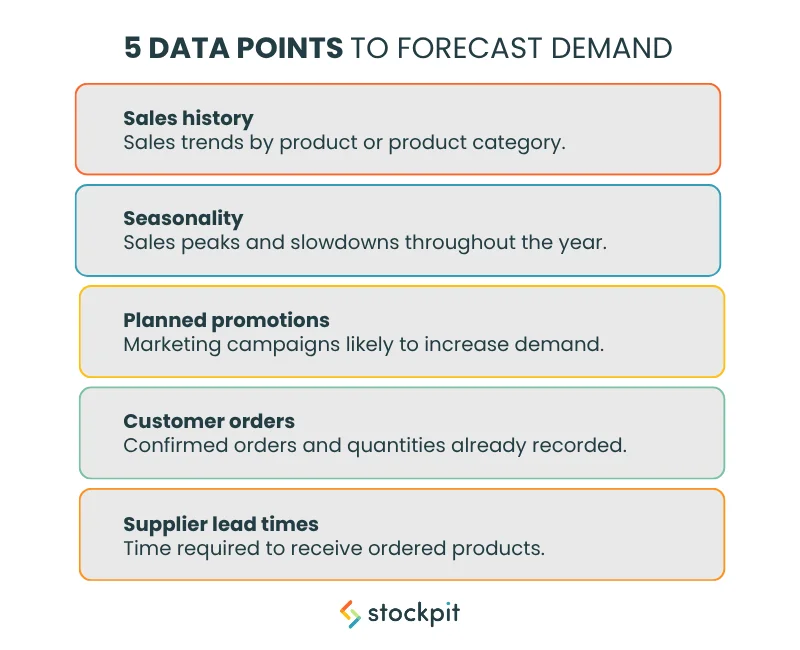
Sales history provides a useful starting point, but it needs context. A temporary increase may have resulted from a promotion, an unusual customer order, or a seasonal peak. It may not happen again during the next period.
To adjust order quantities, review several types of data together:
Demand changes over time. Forecasts should be reviewed whenever sales accelerate, slow down, or enter a new season. Looking only at overall sales is not always enough. A few products may sell very well while the rest of the catalog moves slowly.
Monitoring each product helps businesses order quantities that are closer to actual demand. It also reduces the need for urgent purchases. To learn more, read our guide to inventory replenishment methods and best practices.
Excess inventory occurs when quantities on hand remain above actual needs. Slow-moving inventory refers to products with few or no sales over an extended period.
In both cases, the money invested remains tied up. Products continue to take up space and must still be counted during inventory counts. The longer they remain in storage, the greater the risk of damage, expiration, or obsolescence.
The quantity on hand only tells part of the story. It should be compared with the date of the last sale, the product’s usual sales velocity, and its value.
An item can continue selling while still being overstocked. For example, selling ten units per month will not quickly clear the 300 units currently on hand. Conversely, a product with no recent sales may simply be going through its usual off-season.
Regular monitoring allows businesses to take action before products lose too much value.
When a slowdown is identified, the first step is to pause or reduce upcoming purchase orders. Products already in inventory can then be offered at a discount, bundled into a kit, or sold through another channel. Some suppliers may also accept a return or exchange while the goods are still marketable.
Waiting usually reduces the number of available options. A modest discount applied early may cost less than a late clearance sale or disposal.
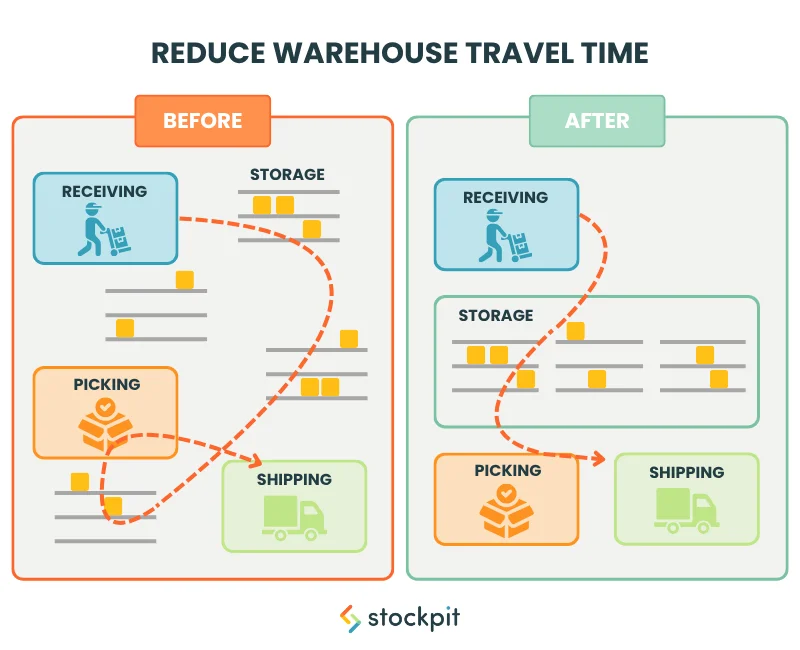
Inventory costs also depend on how products are stored. A poorly organized warehouse increases travel time, slows order picking, and may leave valuable storage space unused.
Each area should have a clear purpose. Products awaiting inspection, available inventory, returns, and orders ready to ship should be kept separate. This prevents mix-ups and makes inventory movements easier to track.
Grouping SKUs also reduces the risk of products being forgotten at the back of a shelf. When the building layout allows it, using vertical space can free up floor space. Before leasing additional storage space, review how efficiently the existing space is being used.
High-demand SKUs can be stored close to the picking and shipping areas. Heavy, bulky, or fragile products should have suitable locations to reduce handling and damage.
The warehouse layout should evolve with sales patterns. A product that sold quickly six months ago may no longer need the most accessible location. Our guide to warehouse zones explains the different areas to include and the role each one plays.
A volume discount may look attractive when only the unit price is considered. However, a large order may remain in the warehouse for several months. The initial savings can then be offset by storage, handling, and the loss of value on unsold goods.
Before committing to a large quantity, estimate how long it will take to sell. Available space, cash tied up in inventory, and the consistency of demand should also be considered.
A smaller order may cost slightly more per unit while reducing the amount of cash tied up. The calculation should cover the entire inventory holding period.
Several terms can be discussed with suppliers:
For certain products, consignment inventory provides another option. The goods are stored at the customer’s location but remain the supplier’s property. The customer only pays for them when they are sold or used.
When information is spread across multiple files, inventory quantities quickly become difficult to track. A replenishment order may be placed with a supplier even though the products are already available at another location. A SKU with slowing sales may also go unnoticed for several months.
Every manual data entry increases the risk of errors. A missed inventory movement makes the system quantity inaccurate and affects the decisions based on that number. Teams then spend time locating products, checking spreadsheets, or correcting discrepancies.
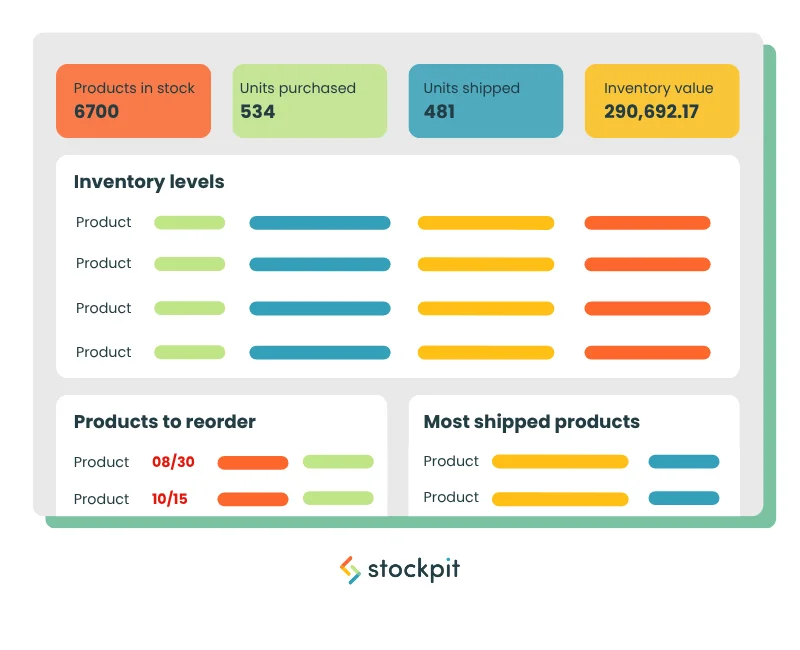
Inventory management software centralizes receipts, shipments, transfers, and quantities on hand. Teams share up-to-date information before ordering, transferring goods, or performing an inventory count.
By bringing this data together, Stockpit helps businesses adjust their purchasing decisions and reduce unnecessary inventory. You can try Stockpit free for 14 days.
Reducing inventory costs starts with a clearer understanding of the products already on hand. Sales history informs forecasts. Turnover tracking reveals which SKUs are accumulating. Warehouse organization and supplier terms support these efforts.
Results build over time. Regular checks, reliable data, and timely decisions prevent a few poorly planned orders from turning into months of additional inventory costs.
Inventory costs include the cash tied up in goods, warehouse rent or maintenance, handling, insurance, and the time spent managing inventory. Businesses must also account for damage, expiration, obsolescence, and product losses.
Add all inventory-related expenses over a given period, then divide that amount by the average inventory value. The result is generally expressed as a percentage. Businesses may include financing, warehousing, labor, insurance, and depreciation costs.
Monitor demand for each product, track actual supplier lead times, and set an appropriate reorder point. Safety stock can absorb fluctuations in demand or supplier delays. Its level should be adjusted whenever sales patterns or lead times change.
Excess inventory ties up cash in products that have not yet been sold. It takes up space, increases handling, and exposes goods to a loss in value. It can also make it harder to identify which products are actually selling and should receive more purchasing budget.
Inventory management software brings together quantities, movements, and inventory value. It helps businesses identify slow-moving products, check availability before purchasing, and trigger replenishment based on predefined reorder points. Regular inventory counts also improve the accuracy of the data used to make decisions.
Say goodbye to stockouts! Get your inventory valuation, monitor the inflow and outflow of products and keep track of your inventory.


